
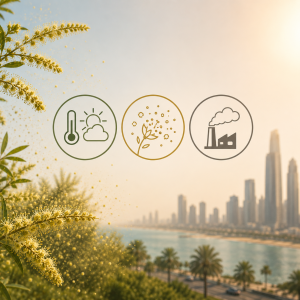
When Weather and Pollution Combine: Understanding the Environmental Drivers of Pollen Allergies
Pollen allergies are among the most common environmental health problems affecting millions of people worldwide, yet many individuals are unaware that their symptoms are influenced by more than just the presence of pollen in the air. While pollen is naturally released by trees, grasses, and flowering plants as part of their reproductive cycle, environmental factors such as weather conditions and air pollution can significantly alter how pollen behaves and how strongly it affects human health. As a result, understanding the relationship between pollen, weather, and pollution has become an important area of research for scientists seeking to reduce allergy-related health risks. Weather conditions play a crucial role in determining the concentration of pollen in the atmosphere. Warm temperatures often stimulate plant growth and flowering, leading to increased pollen production. Windy conditions can transport pollen grains over long distances, increasing exposure even in areas far from the original source. Humidity and rainfall also influence pollen levels by affecting the movement and distribution of airborne particles. Although rainfall can temporarily reduce pollen concentrations by washing particles out of the air, changing weather patterns may also contribute to longer pollen seasons and greater overall exposure. In addition to weather, air pollution has emerged as another important factor affecting allergy severity. Pollutants such as particulate matter (PM2.5 and PM10), nitrogen dioxide (NO₂), and ozone (O₃) can irritate the respiratory system and increase sensitivity to allergens. Research suggests that when pollen particles interact with air pollutants, they may become more aggressive in triggering allergic reactions. This combination can result in more severe symptoms, including sneezing, nasal congestion, itchy eyes, coughing, breathing difficulties, and asthma attacks. Individuals living in urban areas may therefore experience stronger allergic responses due to the simultaneous presence of high pollen levels and elevated air pollution. The growing impact of climate change further highlights the importance of this issue. Rising temperatures, changing rainfall patterns, and increasing pollution levels may alter the timing and intensity of pollen seasons, potentially increasing the number of people affected by allergies in the future. At Fujairah Research Centre, researchers are working to address this challenge by developing innovative approaches to monitor and understand pollen distribution across the United Arab Emirates. One of the centre’s long-term goals is to contribute to the development of the UAE’s first pollen atlas, a comprehensive resource that maps the geographical distribution of pollen-producing plants and identifies areas with varying levels of allergy risk. Such a tool could provide valuable information to the public by helping individuals anticipate periods and locations of high pollen exposure, allowing them to take preventive measures before symptoms occur. In addition, the atlas would support farmers, beekeepers, environmental researchers, and policymakers by providing insights into the types of plants present in different regions and their seasonal pollen patterns. For beekeepers in particular, understanding local floral resources can help improve hive management and honey production strategies. By combining environmental monitoring, geographic mapping, weather observations, and health research, this initiative has the potential to improve public health awareness while also supporting agriculture, biodiversity conservation, and sustainable environmental management across the UAE.